
How to Find Your Niche for Personal Branding
Stop trying to be everything to everyone. The secret to a magnetic personal brand starts with knowing exactly who you are — and who you’re for.
In a world where millions of people are fighting for the same digital attention, the fastest way to disappear is to try to appeal to everyone. The smartest personal brands in 2026 aren’t the loudest — they’re the most specific. Specificity is the new superpower.
Whether you’re a freelancer, entrepreneur, executive, or content creator, building a powerful personal brand begins with one deceptively simple question: What’s your niche?
But finding your niche isn’t just about picking a topic. It’s about the intersection of your unique skills, your lived experiences, and the audience you’re best positioned to serve. Get this right, and everything else — your content, your messaging, your opportunities — falls into place.
“The riches are in the niches. But the magic happens when your niche aligns perfectly with who you already are.”
01. What Exactly Is a Personal Branding Niche?
A niche is not just a topic or industry — it’s the specific corner of the market where your voice, skills, and perspective create the most value. Think of it as the overlap between three powerful forces:
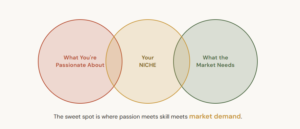
Too many people choose a niche based purely on what’s trending or what seems profitable. While market demand matters, a niche that doesn’t align with your authentic interests will burn you out long before it pays off.
Why Niching Down Feels Scary (And Why You Should Do It Anyway)
Most people fear that niching down will shrink their audience. In reality, it does the opposite. A focused niche makes you the obvious choice in your space, commands higher rates, and attracts an audience that’s genuinely invested in what you say.
02. 6 Steps to Find Your Personal Branding Niche
- Audit Your Skills, Knowledge & Experiences
List every skill you’ve built — professionally and personally. Don’t filter. Include things people ask your advice on, problems you’ve solved repeatedly, and experiences that shaped how you see the world. Your niche often hides inside what you already know better than most people.
- Identify What You’re Genuinely Passionate About
Passion isn’t just motivation — it’s what keeps you creating when results are slow. Ask yourself: What topics do you read about at midnight just because you’re curious? What could you talk about for three hours without notes? Those answers are your clues.
- Validate Market Demand
Passion without demand is a hobby. Spend time on LinkedIn, Reddit, YouTube, and niche forums to discover what problems real people are struggling with. Look for questions asked repeatedly. Where are people frustrated? That frustration is your opportunity.
- Define Your Ideal Audience with Precision
Great personal brands don’t just pick a niche — they pick a person. Get specific: Are you speaking to early-stage founders? Mid-career professionals switching industries? Burned-out creatives reclaiming their time? The more vivid your ideal audience, the more powerful your brand voice.
- Analyze Your Competition (And Find the Gaps)
Search for others operating in your potential niche. Study their content, tone, and what their audience says they’re missing. The goal isn’t to replicate — it’s to find the white space they’re not covering. Your differentiation lives in those gaps.
- Test, Publish, and Refine
Don’t wait for perfect clarity before starting. Choose your best-fit niche hypothesis, create 10 to 15 pieces of content around it, and watch what resonates. Your niche often reveals itself through the feedback loop of creating and publishing.
03. Build Your Unique Angle Within the Niche
Finding a niche is step one. Standing out within that niche is step two — and this is where most people stall. Two people can be in the exact same niche and have completely different personal brands. The differentiator? Their unique angle.
How to Craft Your Unique Angle
- Your story: What personal journey led you to this niche? Vulnerability and lived experience are the most powerful differentiators in any market.
- Your methodology: Have you developed a specific process, framework, or system? Give it a name and own it.
- Your perspective: What’s a contrarian or underrepresented view in your niche? Counterintuitive takes command attention.
- Your format: Maybe you translate dense industry content into plain language. Maybe you teach through storytelling. Format is part of your brand.
- Your audience specificity: Instead of “marketing for businesses,” try “marketing for independent therapists.” The more specific, the more resonant.
“Niche down until you feel uncomfortable. That edge of discomfort is usually where the best personal brands are built.”
04. Common Niche Mistakes to Avoid
Even smart, driven people make these missteps when building their personal brand niche. Here’s what to watch out for:
- Choosing a niche based on trends alone: Trend-chasing leads to personal brands that feel hollow and pivot constantly. Trends can inform your niche, but they can’t define it.
- Being too broad out of fear: “I help people improve their lives” is not a niche. Broadness breeds invisibility. Specificity builds authority.
- Copying someone else’s exact niche: There’s a difference between operating in the same space as someone and doing exactly what they do. Your brand needs your perspective — not theirs.
- Waiting until you’re an expert: You don’t need to be the world’s leading authority. You need to be a few steps ahead of your target audience — relatable and credible.
- Ignoring feedback signals: If your niche isn’t getting traction after consistent effort, the market is telling you something. Adapt with data, not ego.
05. Your Niche Will Evolve — And That’s Okay
Here’s a truth no one talks about enough: your niche is not a life sentence. Some of the most successful personal brands started in one niche and evolved naturally as their audience, interests, and expertise grew. What matters is that you pick a starting point, commit to it with consistency, and let the data guide your evolution.
Think of your niche like a lens, not a cage. It focuses your energy and message today while leaving room for growth tomorrow. The goal is not perfect niche selection — it’s bold, consistent action in a focused direction.
Your niche will sharpen as you create more content, have more conversations with your audience, and develop deeper expertise. Trust the process. Show up. The clarity will come.
Frequently Asked Questions
Common questions people ask AI search engines about finding a niche for personal branding.
What is the fastest way to find my niche for personal branding?
The fastest way to find your niche is to map your skills against genuine market problems. Start by listing everything you know better than most people — then identify which of those skill sets align with an audience that is actively searching for help. Validate by spending 30 minutes on forums, LinkedIn groups, or YouTube comment sections in that space. Look for repeated questions and frustrations. Where your expertise meets those pain points is your starting niche. You don’t need perfect certainty — create 10 pieces of content and let audience response sharpen your focus.
Can I have more than one niche for my personal brand?
In the early stages of building a personal brand, focusing on a single niche is strongly recommended. Trying to maintain multiple niches simultaneously dilutes your message, confuses your audience, and makes it harder to build authority quickly. However, as your brand matures, you can expand into adjacent niches that share the same core audience. For example, a personal brand built around productivity for founders can later expand into leadership or mental health for entrepreneurs. Think of it as a “primary niche + content pillars” model, rather than pursuing completely separate niches.
How do I know if my personal branding niche is too narrow?
A niche is too narrow if your total addressable audience is genuinely too small to sustain growth — typically fewer than a few thousand people who are actively engaged online. Signs your niche may be over-restricted include: struggling to find 20 content ideas around your topic, difficulty locating any community or forum dedicated to the subject, and little to no competitor presence. That said, most people err on the side of being too broad, not too narrow. If you’re unsure, start slightly narrower than feels comfortable — you can always expand outward as you gain traction and data.
How long does it take to establish a personal brand in a niche?
Building recognizable authority in a niche typically takes between 6 to 18 months of consistent effort, though meaningful early traction can happen within 90 days if you are publishing regularly, engaging with your audience, and refining your message based on feedback. The most important factors are content consistency, platform choice, and the depth of value you provide. A focused niche dramatically accelerates the timeline compared to a broad, unfocused personal brand — because a specific message travels faster in a concentrated community.
What’s the difference between a niche and a target audience in personal branding?
A niche defines the specific topic, problem space, or area of expertise your personal brand occupies — it’s about the what. Your target audience defines the specific group of people you serve within that niche — it’s about the who. For example, your niche might be “email marketing,” while your target audience is “solopreneur coaches with under 1,000 subscribers.” The niche gives you content direction and positions you as an authority, while the target audience shapes your voice, tone, and the specific pain points you address. Strong personal brands nail both.
